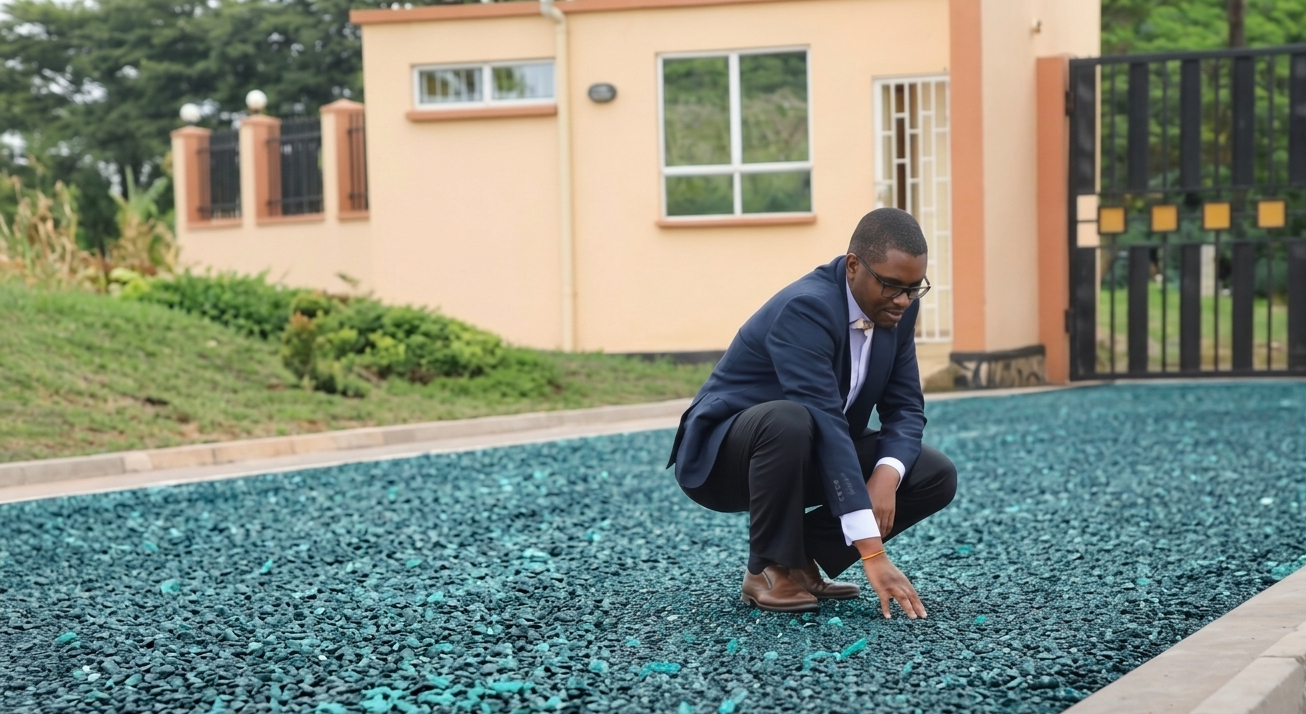
SIMPLAB Plasphalt represents a groundbreaking innovation in sustainable infrastructure development that addresses two critical challenges simultaneously: plastic waste management and road infrastructure deterioration. By incorporating recycled plastic waste into asphalt, this technology transforms an environmental hazard into a valuable resource for road construction. The technology enhances road durability, strength, and resilience while promoting circular economy practices and cost-effective infrastructure development. First demonstrated at Busitema University, the technology is now being rolled out at Nabwojjo road in Kira Municipality, showcasing its practical applicability and potential for wider adoption across Uganda and beyond.
Uganda faces two significant challenges: mounting plastic waste pollution and deteriorating road infrastructure. Conventional asphalt roads are susceptible to cracking, potholes, and premature failure due to heavy traffic loads, extreme weather conditions, and poor drainage. Meanwhile, plastic waste continues to accumulate in landfills, waterways, and communities, creating environmental and health hazards. The lack of sustainable solutions to address both plastic pollution and road infrastructure challenges requires an innovative approach that transforms waste into a valuable resource.
SIMPLAB Plasphalt is an innovative road construction solution that utilizes recycled plastic waste to enhance asphalt performance and promote sustainable infrastructure development. Developed as a waste-to-value technology, Plasphalt offers a practical approach to reducing plastic pollution while improving road durability, strength, and resilience. SIMPLAB Plasphalt supports cleaner communities, circular economy practices, and cost-effective infrastructure innovation. First constructed at Busitema University, currently the technology is being rolled out at Nabwojjo road, Namugongo B Division, Kira Municipality.
A waste-to-value road construction technology that incorporates recycled plastic waste into asphalt to enhance road durability, strength, and resilience while reducing plastic pollution. The technology transforms plastic waste from an environmental liability into a valuable resource for sustainable infrastructure development, supporting circular economy practices and cost-effective road construction.
Key Features
• Utilizes recycled plastic waste as a reinforcing material in asphalt
• Waste-to-value technology addressing plastic pollution
• Enhanced road durability and strength
• Improved resistance to cracking and pothole formation
• Greater resilience under heavy traffic loads
• Supports circular economy practices
• Cost-effective infrastructure innovation
• Promotes cleaner communities
• First constructed at Busitema University
• Currently being rolled out at Nabwojjo road, Namugongo B Division, Kira Municipality

Local governments and municipalities; Road construction companies; Communities near plastic waste accumulation sites; Environmental agencies; Transport sector; Infrastructure developers; Waste management enterprises; Kira Municipality residents